
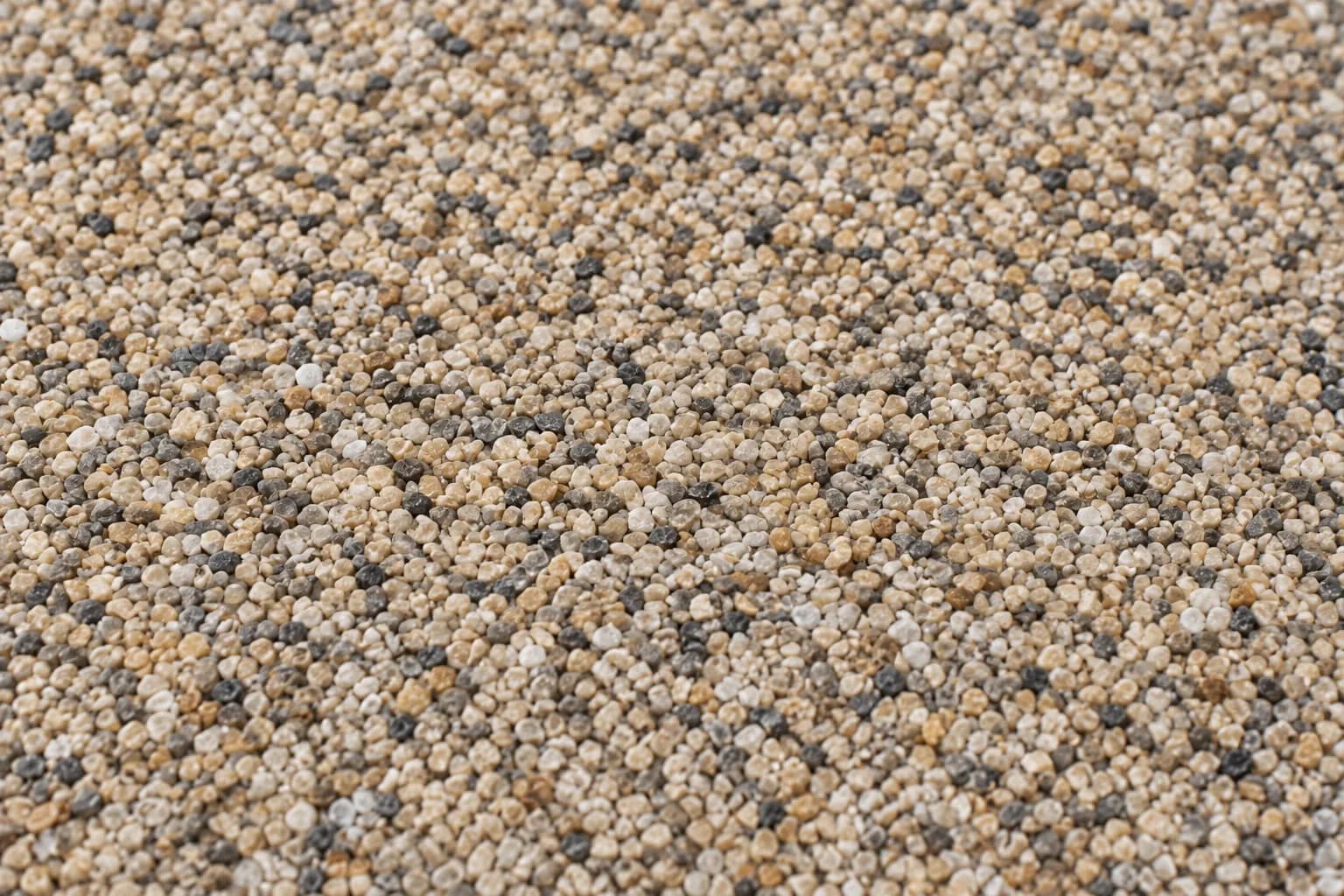
A resin bonded driveway (also called a bonded gravel driveway) is made by spreading a layer of resin onto a prepared base (tarmac or concrete) and then scattering loose, kiln-dried stone over the wet resin so it sticks. Once cured, the excess stone is swept off, leaving a hard-wearing, textured finish that looks like loose gravel but is fixed in place. Unlike resin bound — where stone is mixed through the resin and trowelled smooth — resin bonded is a thin scatter coat, and crucially it is not permeable: the continuous resin film seals the surface so water runs off rather than draining through.
How it is made, and how thick it is
Installation is a two-stage process: resin is spread across the substrate at roughly the rate in the manufacturer’s specification, then loose kiln-dried aggregate is scattered on until fully covered, and the excess is swept away after curing. The specified resin rate, aggregate grading and finished thickness depend on the product. Because the resin bonds to the base rather than forming a structural layer of its own, that base must be sound tarmac or concrete.
What it is made of
Two parts: a two-component resin binder and loose, washed, kiln-dried decorative aggregate (typically 1–3 mm) scattered on top. For any outdoor surface the resin should be aliphatic polyurethane (genuinely UV-stable) — cheaper aromatic resins yellow within months of sun exposure.
How much does a resin bonded driveway cost per square metre?
Resin bonded is the budget option, typically £35–£60/m² as an indicative surface allowance over a sound tarmac or concrete base — cheaper per m² than resin bound (around £60–£100/m²). Our provisional groundwork allowance adds £25–£50/m², with an editorial small-job allowance of £1,000–£1,500. A survey must establish the full base and drainage scope.
| Driveway size | Over a sound base | With a new sub-base |
|---|---|---|
| 15 m² (e.g. 5 × 3 m) | £1,000–£1,500 | £1,000–£1,650 |
| 30 m² (e.g. 6 × 5 m) | £1,050–£1,800 | £1,800–£3,300 |
| 50 m² (e.g. 10 × 5 m) | £1,750–£3,000 | £3,000–£5,500 |
Indicative national ranges, not quotes. Price your own size with the cost calculator by choosing the resin bonded finish.
How long does it last?
Service life varies with the product, base, traffic and maintenance. A common maintenance concern is “ravelling”: because stones are only glued at their base, tyre abrasion, UV and weathering can gradually detach them. Localised repairs or a new coat may extend a worn surface when the substrate remains sound, but there is no universal re-coating interval: inspect it and follow the named system's maintenance advice.
Is it permeable? Planning permission
No — resin bonded is impermeable because its resin film seals the surface. In England, a front hard surface over 5 m² must direct run-off to a permeable area within the property to remain permitted development; otherwise permission may be required. Other UK nations frame the rule differently, so read the planning and drainage guide and check locally.
Pros and cons
Pros: lower installed cost; a decorative gravel-like look with no loose stones underfoot; and high grip, which suits slopes, ramps and accessible routes when properly specified. Cons: impermeable, so it needs on-site drainage and may need permission; shorter lifespan with progressive stone loss; a thin coat that is less robust under heavy vehicles; and more upkeep as loose aggregate develops.
Colours, repair and maintenance
The colour and look come from the chosen decorative aggregate, in a textured, loose-gravel appearance rather than resin bound’s smooth “stone carpet”. Maintenance is moderate: sweep stray stones, inspect worn areas and use the manufacturer's repair system where needed. Repairs are possible but patches tend to show, and a badly worn surface may need a full new coat.
Where bonded suits — and where bound wins
Choose resin bonded when budget is the priority, for paths, decorative areas and light-traffic surfaces, or where maximum grip matters. Choose resin bound for a main driveway and anywhere drainage, longevity and a clean finish count — its porous surface can form part of a fully draining build, it is smoother and binds stones through the full surface depth. Planning still depends on the complete drainage design and local rules. For the full side-by-side, see resin bound vs resin bonded.