ResinCosts.
Independent practical guide

Resin Bound Paths & Pathways

A resin bound path gives a smooth, firm walkway with no loose gravel underfoot. Its surface layer is porous, and a well-designed path can provide an accessible, seamless route. Here is what it costs and how it compares with gravel and slabs.

Published by Reviewed
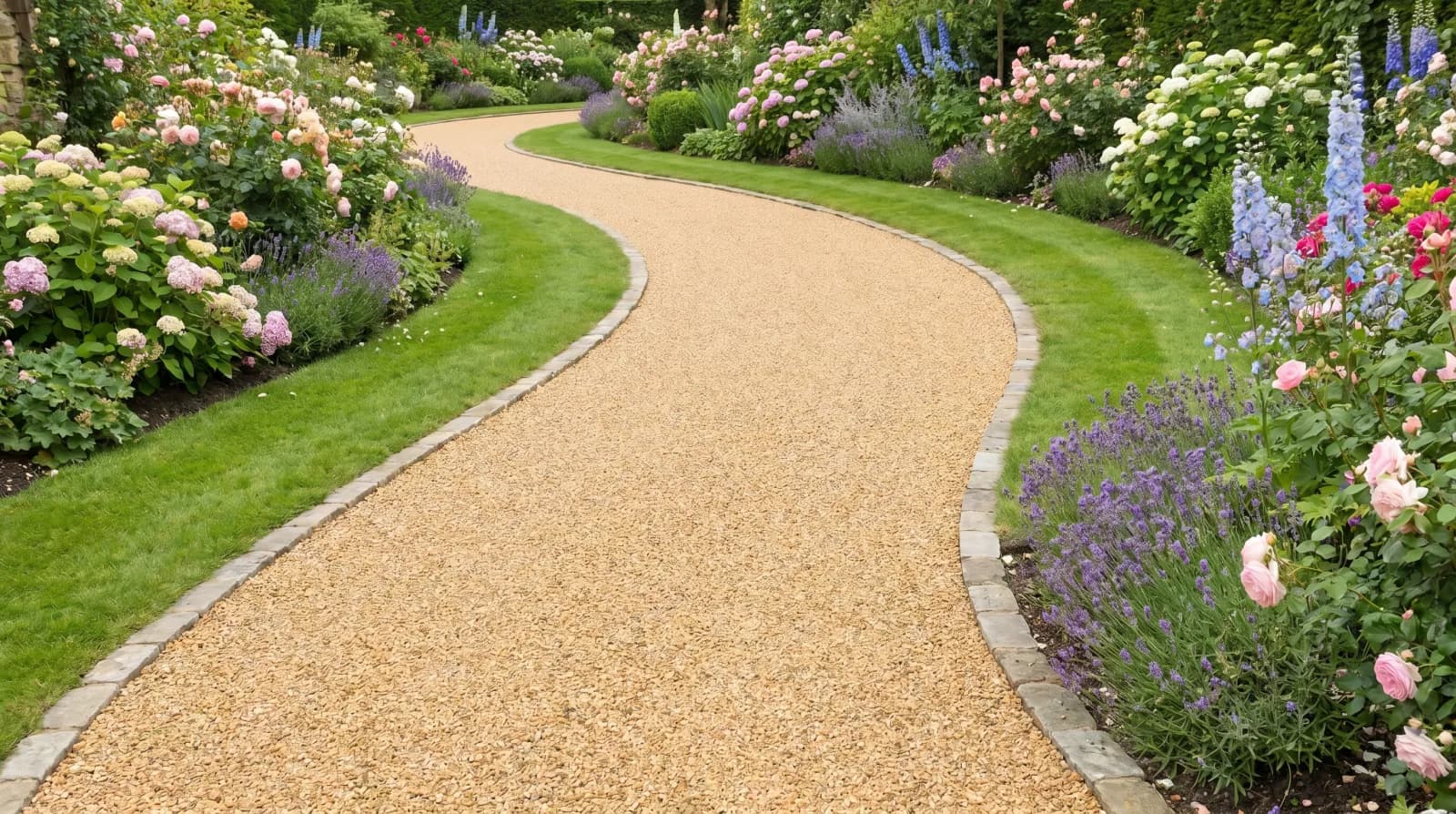
A resin bound path winding through a planted UK garden
Design illustration: a curved route and defined edges. Check width, gradient and turning space for your needs.

A resin bound path is the same system as a resin bound driveway — decorative aggregate bound in clear resin and trowelled smooth — laid as a walkway. It is a popular, tidy upgrade from loose gravel or worn slabs.

How much does a resin path cost?

Resin bound is priced per m² — typically £60–£100/m² installed. A path is narrow, so the area and total are modest, but our editorial small-job allowance of£1,000–£1,500 is applied in our model for mobilisation, so a short path costs more per m² than a large drive. A pedestrian path can be laid a little thinner than a driveway, which trims materials slightly. Use the cost calculator with your length and width.

Why resin for a garden path

Unlike loose gravel, a resin bound path does not scatter, rut or migrate into borders, and unlike slabs it has no open joints for weeds. A correctly designed route can be smooth and firm for wheelchairs, prams and bikes. The surface layer is porous; rainwater drainage also depends on the base, falls and surrounding ground.

Resin path ideas

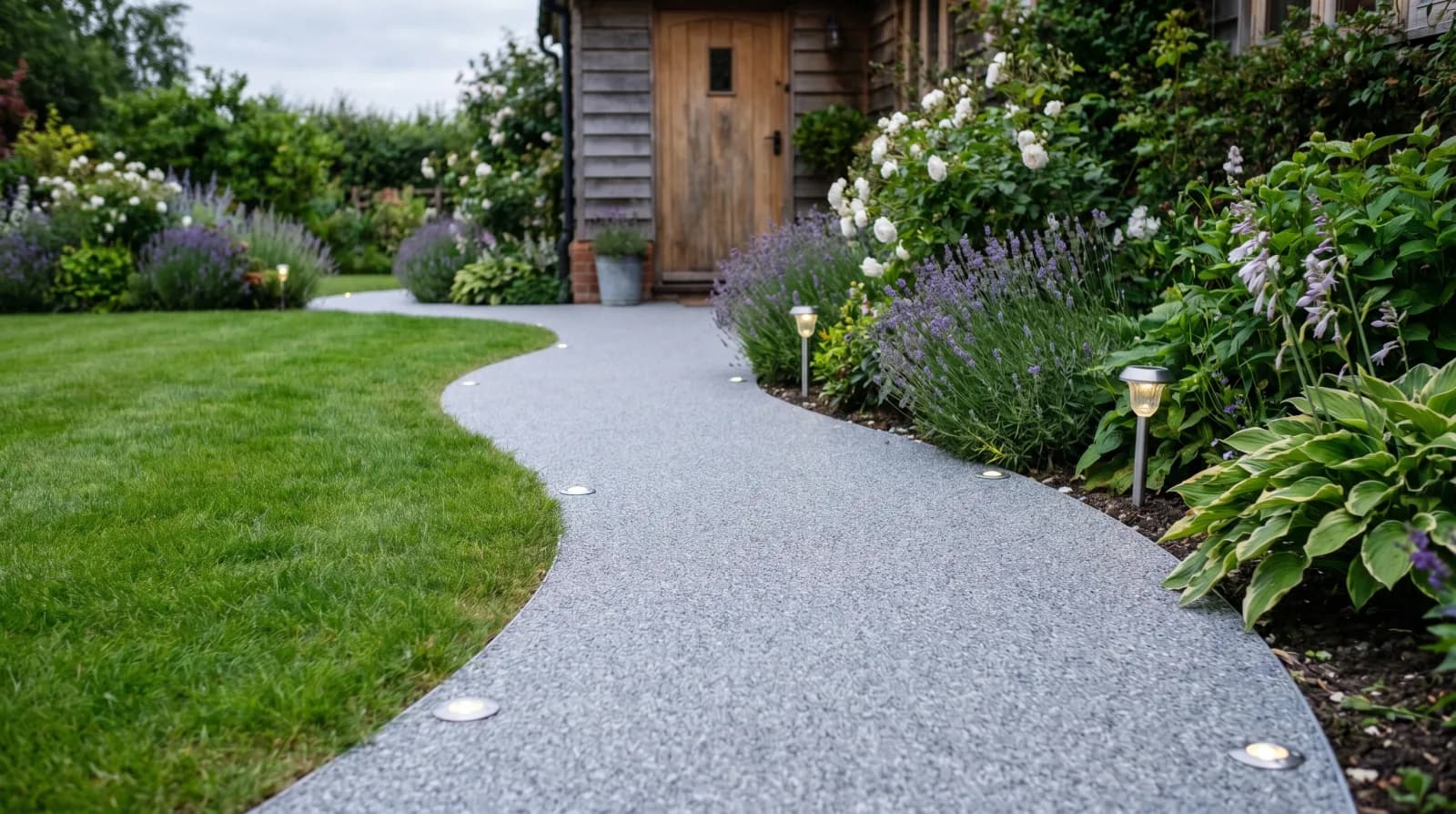
A gently curving path in a warm gold or cool silver-grey blend, edged with low solar lights or set off with stepping-stone shapes, makes a smart, low-maintenance run to a front door or around a lawn. With no loose stones it stays tidy and is easy underfoot. Match the blend to your home in colours and finishes.

Resin vs gravel and slabs for a path

Loose gravel is cheaper but messy and high-maintenance; slabs can lift, crack or grow weeds in the joints. Resin bound gives the clean, seamless look of both done well, with far less upkeep — at a higher upfront cost than gravel.

Base and installation

A path still needs a sound, suitably prepared base and a dry weather window to lay. Use the named system’s pedestrian specification for depth and loading. For a short path, DIY is more realistic than for a drive — a DIY resin kit can be enough — see how a resin surface is laid for the process and where DIY goes wrong.

Maintenance

Sweep and clean as needed, following the resin-system guidance and using suitable pressure and products. The maintenance guide covers cleaning, weeds and repairs in full.

Example product specification: Vuba Porta Romana, checked 16 September 2026.
Design ideas with practical checks

Picture how you will use the space

Illustrated buff garden path with a defined edge beside lawn and flowers

A soft curve through planting

A continuous edge makes the route easy to follow.

Before choosing: Measure the usable width at the narrowest point, allowing for plants as they grow.

Illustrated silver-grey path with low edge lights and planted borders

A contrasting route to the door

The paler surface stands out against the lawn and borders.

Before choosing: Check gradients, turning space and thresholds. Place lights and edging outside the clear route.

AI-generated design illustrations. The examples do not establish accessibility, drainage performance or a product specification.

Use your measured area in the calculator

FAQs

How much does a resin path cost?

Resin bound is typically £60–£100/m² installed. Paths are narrow, so the area is small and the total is modest — but our editorial small-job allowance of £1,000–£1,500 may raise the estimate, so a short path costs more per m². Enter the length × width in the calculator for an estimate.

Can I lay a resin path myself?

A short garden path is the most DIY-feasible resin project — a careful DIYer can manage a small area with a hired forced-action mixer and a helper. A full driveway is not realistically DIY. See our installation guide for what is involved.

Is resin bound good for a garden path?

It can provide a smooth, firm surface with no loose stones or open paving joints. Accessibility depends on the width, gradient, edging and installation quality. The resin bound layer is porous, but avoiding puddles requires a draining base or suitable on-site drainage.

How thick is a resin path?

Follow the selected product’s depth and base specification. As one example, Vuba’s Porta Romana guidance gives 15 mm for pedestrians and 18 mm for vehicles; other products differ.

Are resin paths slippery?

Grip depends on the aggregate, finish, slope and maintenance. A compatible anti-slip grit can improve grip, while algae, moss, ice or contamination can make any outdoor path slippery.

Free quote check

Get a price for your resin path

Enter your postcode and we'll match you with up to 3 independent local installers for free, no-obligation quotes.

Tell us about your project

Approximate details are fine. Required fields are clearly marked.

Request local quotes

Send one request and we'll check for independent installers covering your postcode. Free to use, with no obligation.

Used only to check local coverage.

Read our Privacy Policy for how we use your details.

Free & no obligation Details shared only with consent