
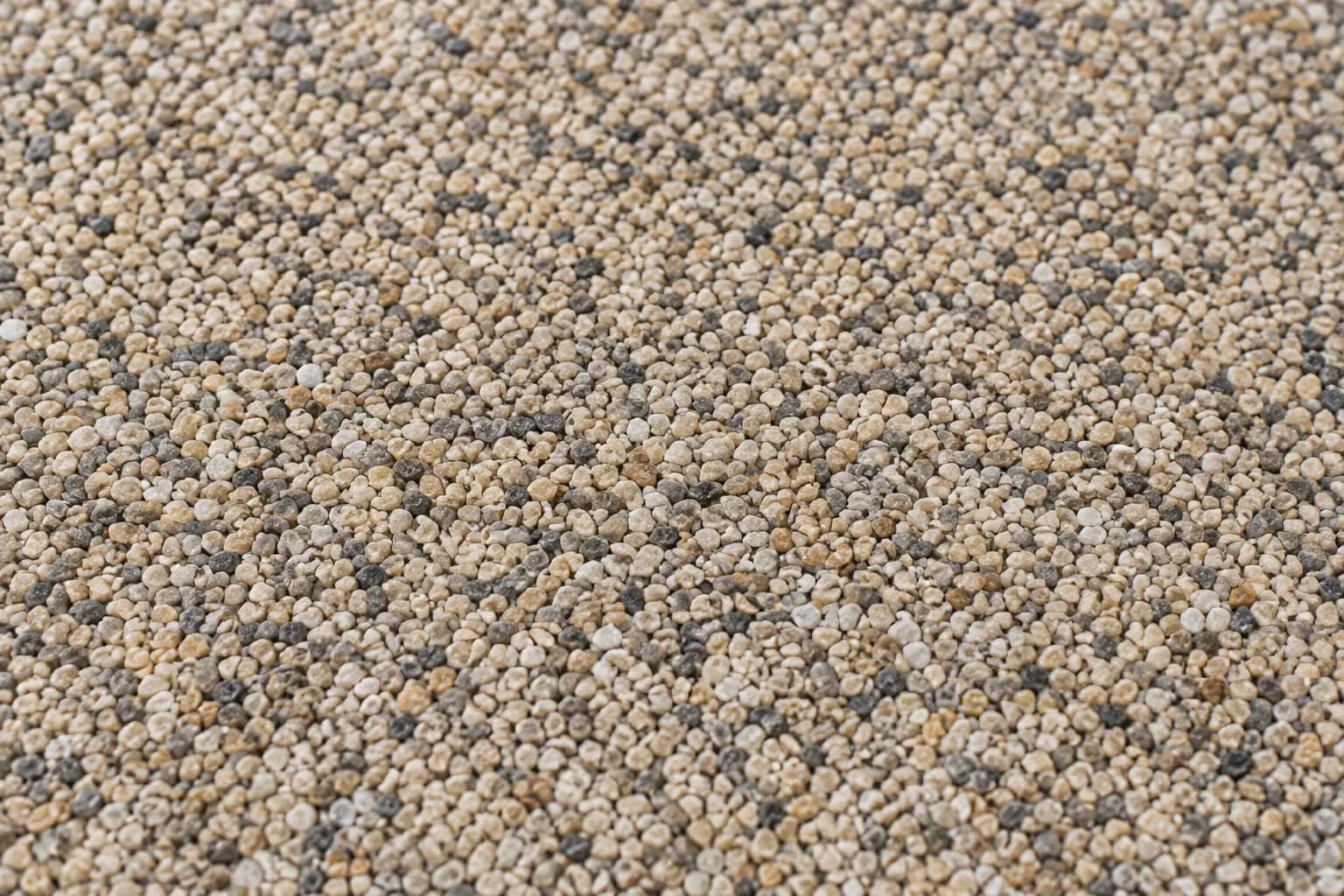
A resin bound driveway is a smooth, seamless surface made by mixing kiln-dried decorative gravel with a clear two-part resin until every stone is fully coated, then trowelling the blend by hand onto a prepared base. Because the stones are bound together throughout the mix — rather than scattered loose — there are no migrating pebbles, and the gaps between particles stay open so water drains through the surface layer. A fully permeable driveway also needs a suitable draining base or a designed on-site drainage route. You will often see it called resin bound gravel: that is exactly the same product.
Resin bound gravel cost and lifespan
Installed, resin bound gravel typically costs £60–£100/m² laid over a sound existing base, or around £85–£150/m² where a provisional groundwork allowance is included. Our model applies an editorial small-job allowance of £1,000–£1,500, so very small areas cost more per m². Actual lifespan depends on the named system and site conditions. Price your own size on the cost calculator; for the cheaper, non-permeable alternative see resin bonded gravel driveways.
How a resin bound surface is made
Dried, washed aggregate and a measured dose of resin are combined in a forced-action (pan) mixer until each particle is evenly coated. A drum or cement mixer will not do — it tumbles rather than shears, leaving stones part-coated. The wet mixture is then spread and hand-trowelled to a level finish. Once mixed, the material has a short working window, so it must be laid promptly — see how a resin driveway is installed.
What it is made of
The two ingredients are decorative aggregate and resin. The resin should be a two-part aliphatic polyurethane — “aliphatic” means it stays colour-stable in sunlight and resists the yellowing that affects cheaper aromatic resins. Aggregates range from natural rounded gravels and crushed granite to marble, quartz and recycled glass, in sizes such as 1–3 mm, 2–5 mm and 6 mm. Most quality blends combine several grades of stone for good packing, appearance and drainage. See the full range on our colours and finishes guide.
The base build-up beneath it
Resin bound is only the wearing course — the top layer of a multi-layer pavement. A complete permeable build commonly uses an open-graded asphalt binder course over a compacted open-graded sub-base such as MOT Type 3, designed for the ground and traffic. Some named systems can overlay sound concrete, tarmac or stable paving, but an impermeable substrate does not become fully permeable and needs falls plus on-site drainage. Edge restraints contain the surface at its specified depth. The wearing-course depth must follow the manufacturer's design for the aggregate and load.
Why it is permeable
Because the resin only glues the stones to each other at their contact points, the spaces between particles stay open all the way down (the void content depends on the system). Rain can soak through the surface and, where the whole system is open-graded, continue through the base into the ground or an approved drainage feature. This can help a front driveway meet the drainage condition for permitted development, but rules differ across the UK and other restrictions can apply — see the planning and drainage guide. Permeability is a whole-system property: laid over sealed tarmac or concrete, the surface alone does not make the driveway permeable.
Where it is used
The same system suits driveways, garden paths, patios, pool surrounds and courtyards. With the right base it carries foot traffic and light vehicles. Its smooth, level finish is comfortable underfoot and accessible for wheelchairs and prams — finer 1–3 mm aggregates give the smoothest result.
How to recognise a quality system
The clearest mark of quality is a current BBA Agrément certificate for the specific resin system, which confirms independent testing of strength, permeability, skid resistance and UV stability. Established UK brands include Addagrip (Addaset), SureSet, DALTEX and RonaDeck. Ask the installer to confirm the resin is aliphatic (UV-stable), the aggregate is kiln-dried, and that you will get a manufacturer-backed warranty — our guide to choosing an installer covers what else to check. To price a resin bound drive, use the cost calculator.