
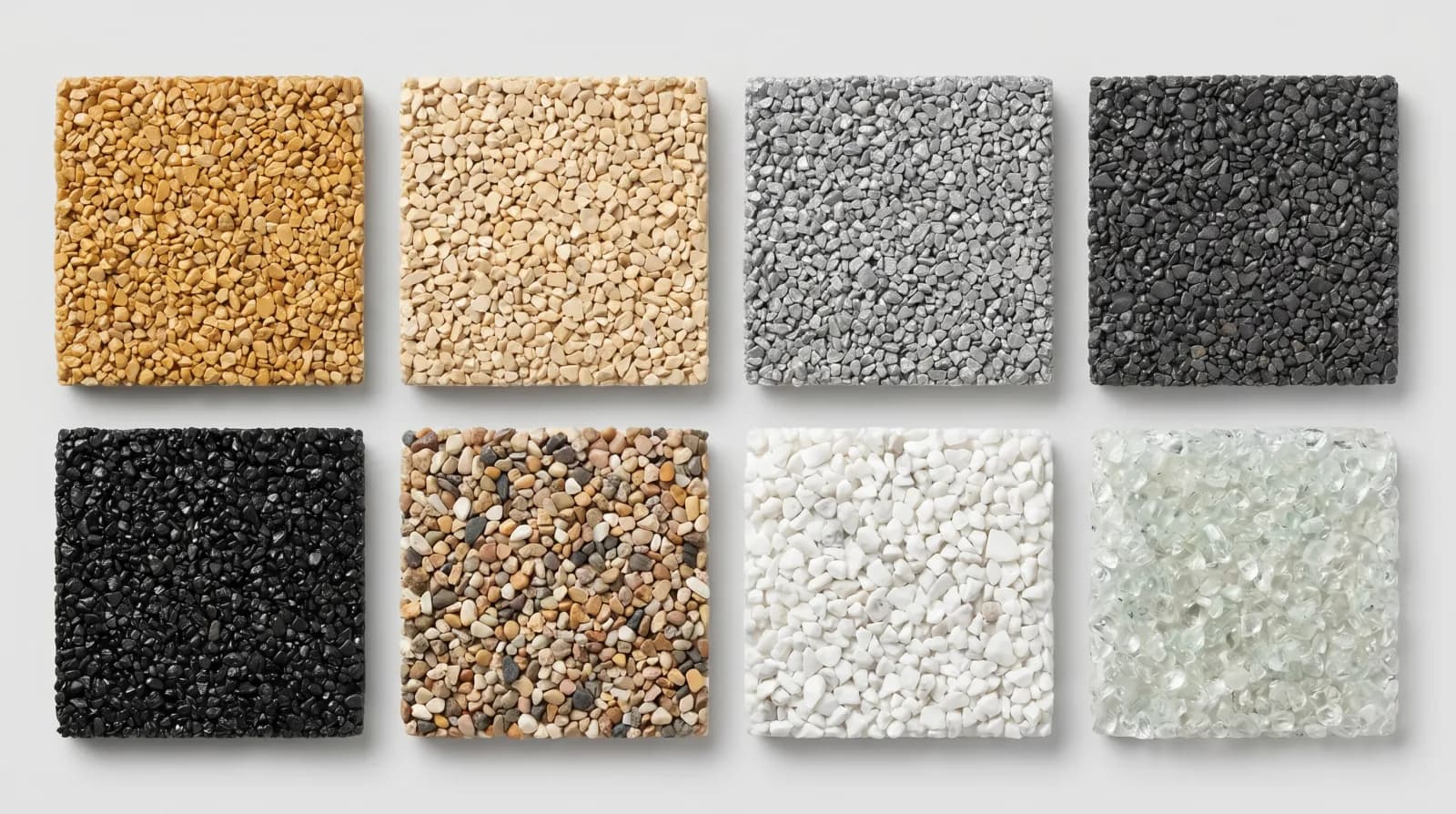
Because the colour comes entirely from the natural stone, marble or recycled glass used (the resin itself dries clear), the tone you pick is a permanent commitment. This guide names the most popular UK colours, the ranges behind them, and how each choice cascades into price, maintenance and kerb appeal.
Popular UK colours and blends
Golds, buffs and warm naturals are widely used — they read as natural stone and forgive everyday dirt, though the palest golds show oil more readily. Greys and silvers include blue-greys, silver-flecked blends and deep charcoal. Blacks create a strong contemporary contrast. Mixed blends give a natural look and are forgiving on everyday appearance. Marble and recycled glassoffer other colours and textures; compare the named system’s price, use and slip-resistance specification.
Compare real supplier samples
The visualiser shows broad colour families. It does not reproduce a named blend. Order an outdoor sample from your shortlisted supplier and compare it beside the house in sun, shade and damp conditions.
View DALTEX blends, SureSet colours and the selected Resincoat variant. Confirm the current product name, aggregate, resin and sample availability directly.
Record the supplier, blend name, aggregate sizes and resin specification alongside your chosen sample. Ask whether your installer can provide the same system and how natural batch variation or future repairs could affect the match.
How colour affects price, dirt, glare and maintenance
Resin bound costs roughly £60–£100/m² as an overlay and £85–£150/m² with a provisional groundwork allowance. Within that, standard blends sit at different prices, while bespoke blends, marble and glass can cost more depending on the supplier and availability. Mid-tone warm naturals hide dirt best; pale creams and white marble show marks most; dark charcoal hides marks but can reveal white lime bloom. Light aggregates stay cooler but can dazzle near windows; dark blends absorb more heat.
Borders, edging and design features
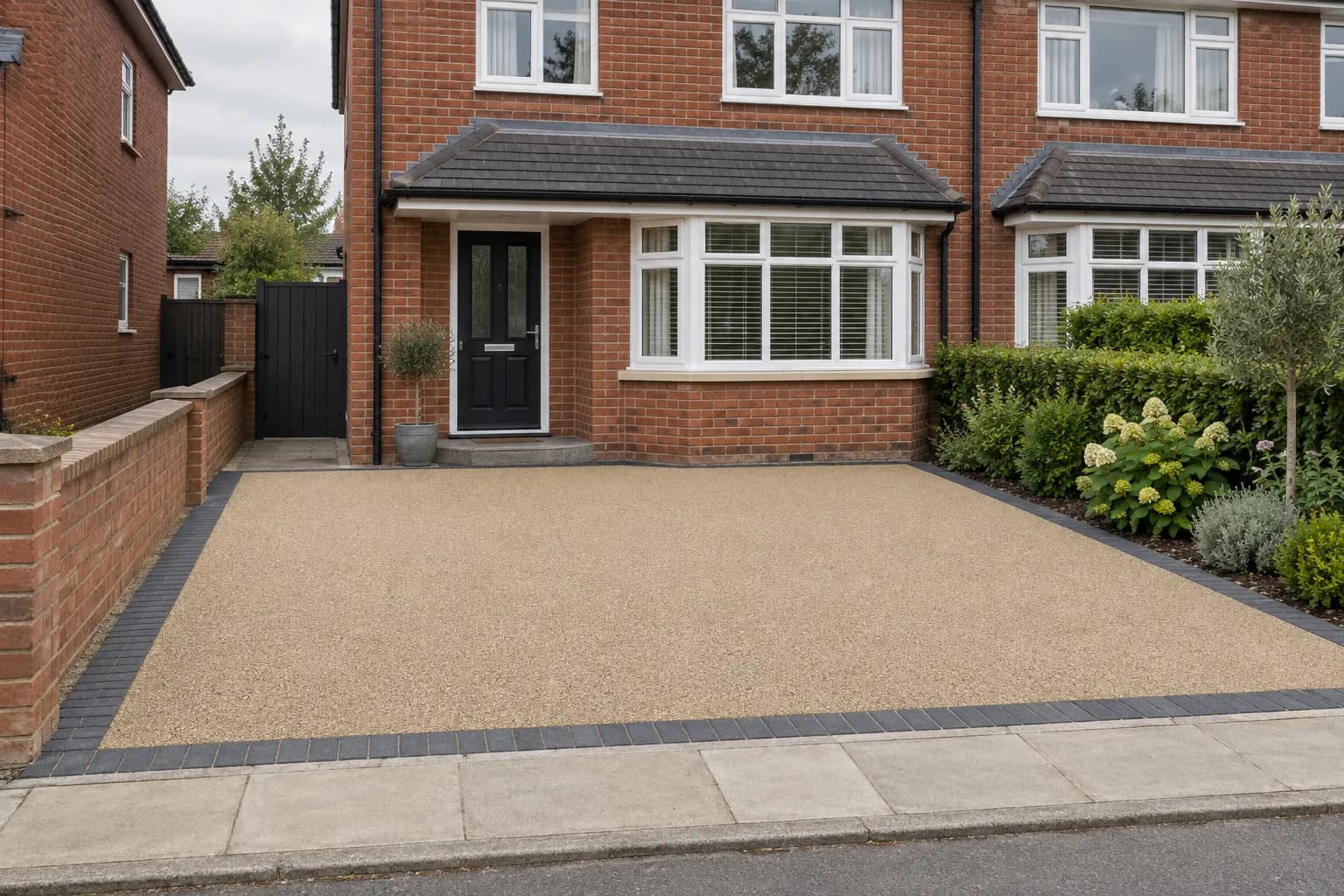
The system needs suitable edge restraint. Existing sound boundaries may provide it; new metal edging, blocks, bricks or stone can be specified where needed. Price the actual detail, length and groundwork rather than assuming one material is always cheapest. Two-tone contrasting borders can frame the main field; finer aggregate can hold crisp edges for logos and house numbers, while lighting can be designed into the edging.
Matching the colour to your property
Match local stone first: warm golds and buffs suit Victorian, Edwardian and rural stone homes; pale creams complement Georgian and Bath-stone properties; charcoal, graphite and silver-grey suit modern grey-render new-builds. For resale, neutral mid-tones appeal to the widest audience — bright marble or vivid inlays can put off buyers.
How to choose your colour
- Match the dominant tone of your house and local stone first.
- For a low-maintenance, dirt-hiding finish, pick mid-tone warm naturals.
- For contemporary homes, choose charcoal, graphite or silver-grey.
- Avoid the palest creams and white marble if you park oily or much-used vehicles.
- Add a contrasting border — the best-value visual upgrade.
- View large outdoor samples in daylight, and always specify UV-stable resin.
For the basics of the surface itself, see resin bound driveways explained; to price your chosen blend, use the cost calculator.