
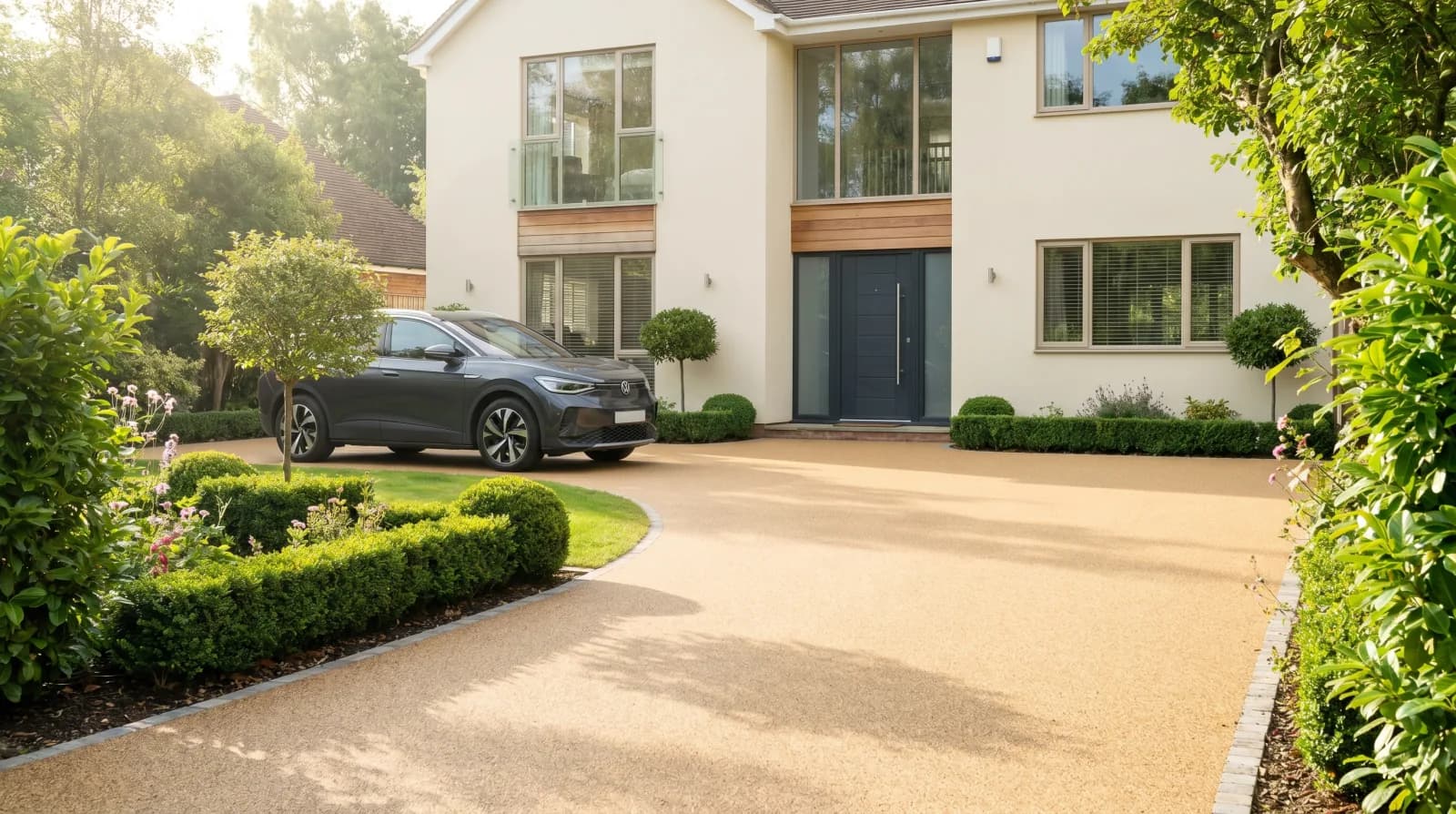
Is a resin driveway worth it?
It can be — if it is properly specified and installed. A resin bound surface is porous and, over a suitable draining base, can form a complete permeable driveway. It is relatively low-maintenance, but it is not automatically the best choice: it costs more than tarmac or gravel, its performance depends on the quality of its base, and a cheap install with the wrong resin can yellow or crack early. Get a few written quotes that specify the complete base, drainage and UV-stable resin. Cut corners on any of those and it is a false economy.
The pros
- Durability depends on the specification — compare documented performance, older installations and the actual warranty terms for the named system.
- Useful drainage option — the porous surface can form part of a compliant on-site drainage design when paired with the right base; planning rules still need to be checked locally.
- Low ongoing maintenance — regular sweeping and cleaning, with no sand-filled joints to replenish.
- Fewer open joints — there are no sand-filled paving joints, although weeds can still establish at edges, cracks or on surface debris.
- Smooth, firm finish — no loose stones; route accessibility still depends on width, gradient, edging and installation quality.
- Strong kerb appeal — a seamless finish in a wide colour range that can be matched to the property.
- Some flexibility — the bound layer is less rigid than concrete, but the base and drainage still determine crack and frost performance.
- Overlay work can be relatively quick — get a written installation and cure schedule for the selected product and weather conditions.
The cons
- Costs more than tarmac or gravel — a quality resin bound drive is a premium surface; price yours with the cost calculator.
- Only as good as its base — a poor or absent base can cause early failure; existing cracking or movement can transfer to the resin.
- Cheap resin yellows — non-UV-stable resin can discolour in sunlight, so you must specify UV-stable (aliphatic) resin.
- Not realistically DIY — it needs specialist mixing and skilled trowelling within a tight working time.
- Repairs can be visible — patches can sit slightly darker for months and never match weathered aggregate perfectly.
- Not for heavy traffic as standard — a domestic spec is not built for heavy vehicles without a load-specific design.
- Weather-dependent install — the base must be dry and conditions must stay within the resin manufacturer's temperature, humidity and cure limits.
- Low, not zero, maintenance — neglect lets moss and algae take hold in shaded areas and can void warranties.
Who it is right for — and not
Right for homeowners who want a porous-surface drainage option, low maintenance and a clean, modern look; properties with a sound existing base or a properly designed new one; and households wanting a smooth route for wheelchairs or pushchairs.
Less suited to the tightest budgets (tarmac or gravel win on price); drives used regularly by heavy vehicles; anyone wanting a DIY job; and some period properties where block or natural stone suits the house better.
Common problems to be aware of
Serious complaints frequently trace back to the base or the install, although traffic, contamination, drainage and maintenance can also contribute: cracking (a weak or shallow sub-base), loose stones or ravelling (a wrong mix ratio or damp aggregate), ponding (not enough fall or a non-porous base), and white patches or foaming (moisture during curing). Careful specification and installation reduce these risks — which is why it pays to read how to choose a resin driveway installer before you book. If you are still weighing finishes, see resin bound vs resin bonded.