
The short answer
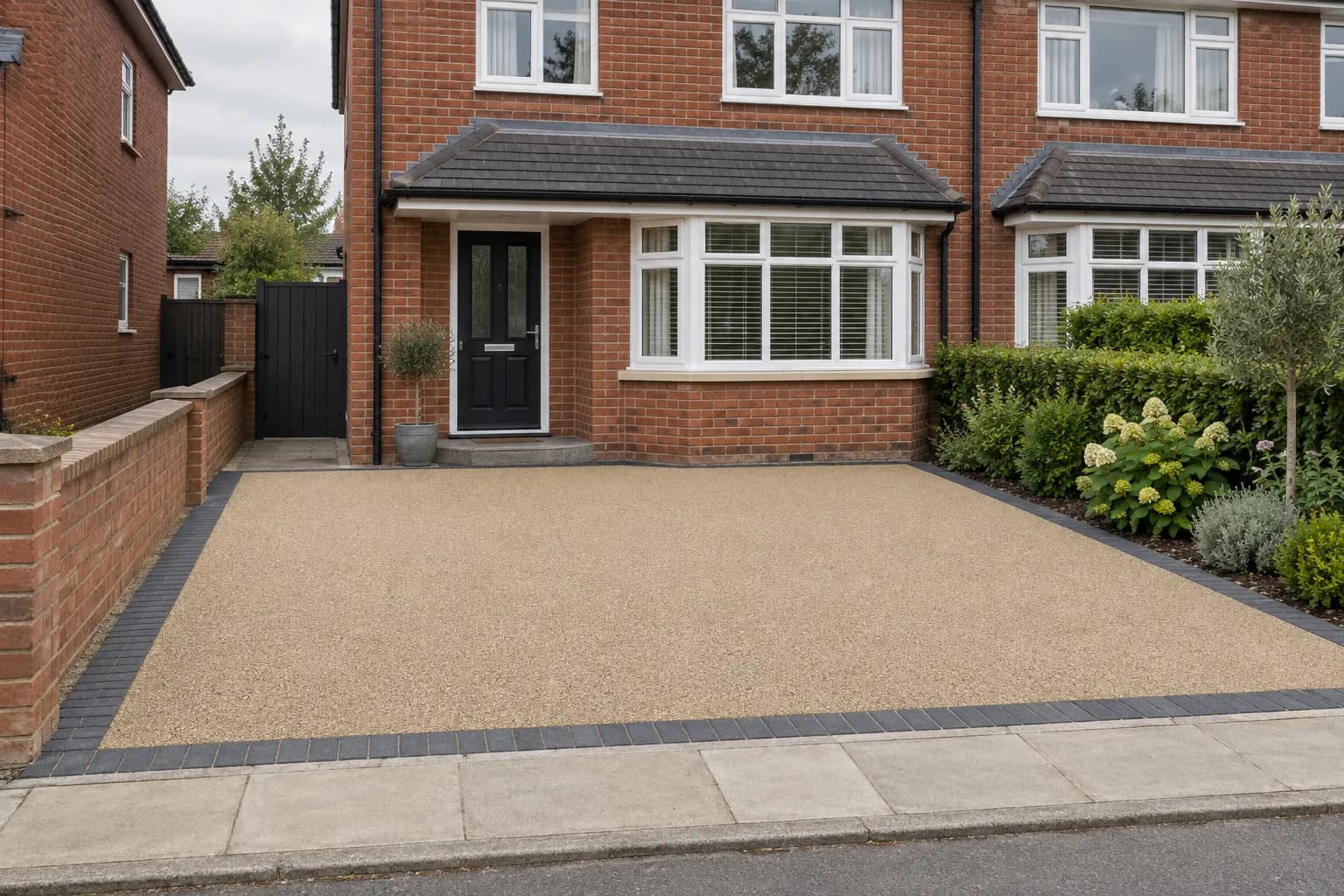
Resin bound costs roughly £60–£100/m² installed — dearer than tarmac, gravel and plain concrete, and similar to or a little cheaper than block paving. It costs more upfront than budget surfaces, but has no sand-filled joints and normally has no fixed resealing schedule. Tarmac and gravel win on upfront price, block paving on individual-unit repairability, and a complete resin bound system can offer a smooth, low-maintenance drainage option.
Depending on your budget, your property’s age, how heavily the drive is used, and whether you are thinking five years ahead or thirty, tarmac, block paving, gravel or concrete can each be the better call. (If you are choosing between the two resin systems instead, see resin bound vs resin bonded.)
At a glance
| Surface | Cost vs resin | Maintenance / repair | Permeable? | Best for |
|---|---|---|---|---|
| Tarmac | Cheaper | Surface repairs may be needed | No | Large / budget drives, heavy vehicles |
| Block paving | Similar / dearer | Depends on construction and upkeep | Only permeable type | Period homes, design choice, easy repairs |
| Gravel | Much cheaper | Raking and replenishment | Yes (porous base) | Large rural plots, tight budgets |
| Concrete | Cheaper | Cracks can be difficult to disguise | No | Heavy-load yards, utility areas |
| Imprinted concrete | Similar | Depends on construction and upkeep | No | Decorative look on a concrete budget |
All comparisons are UK 2026 and indicative; always get three written quotes.
Resin vs tarmac
Tarmac is meaningfully cheaper to install, faster to resurface, and better proven for very heavy or commercial traffic, so it wins for large drives, tight budgets and HGV use. Resin wins on kerb appeal (tarmac fades and softens in heat), on drainage options when it is built as a complete permeable system, and on routine maintenance. In England, either surface can remain permitted development over 5 m² at the front if it is porous or run-off is directed to a permeable area within the property; rules differ elsewhere in the UK.
Resin vs block paving
Block paving is a familiar choice and, in 2026 pricing, is often slightly dearer than resin bound. Its trump card is repairability: a damaged block can be lifted and replaced, whereas resin patches may remain visible. Resin wins on fewer joints and generally lower routine maintenance. Purpose-made permeable block paving offers a repairable option where drainage is important, provided the full base is designed for infiltration.
Resin vs gravel
Gravel is the budget choice, often around half the price of resin and instantly usable, and the crunch underfoot deters intruders. But it is high-maintenance, the stones migrate onto lawns and roads, and it is poor for wheelchairs, prams and bikes. Resin offers a firmer, more contained surface with less migration; gravel wins on upfront cost, simple replenishment and informal character.
Resin vs concrete and imprinted concrete
Plain concrete can be a relatively low-cost permanent surface; pattern-imprinted concrete adds decorative variety. The catch for both: they are not permeable, so a front installation may need on-site drainage or planning permission under the rules for that UK nation. They can crack or spall if the base, joints, mix or curing are poor, and curing times depend on the chosen concrete or resin system and weather. Compare the full load-bearing design and written handover schedule for either surface.
Which should you choose?
Choose resin for a smart, low-maintenance front driveway where drainage compliance and modern looks matter. Choose tarmac for large or heavy-use drives on a budget; block paving for a period home, design flexibility, or if you may need to lift the surface to reach pipes; gravel for a large informal rural plot on a tight budget; and concrete for a heavy-duty rear yard. To price a resin drive, use the cost calculator, and weigh it up with the pros and cons.