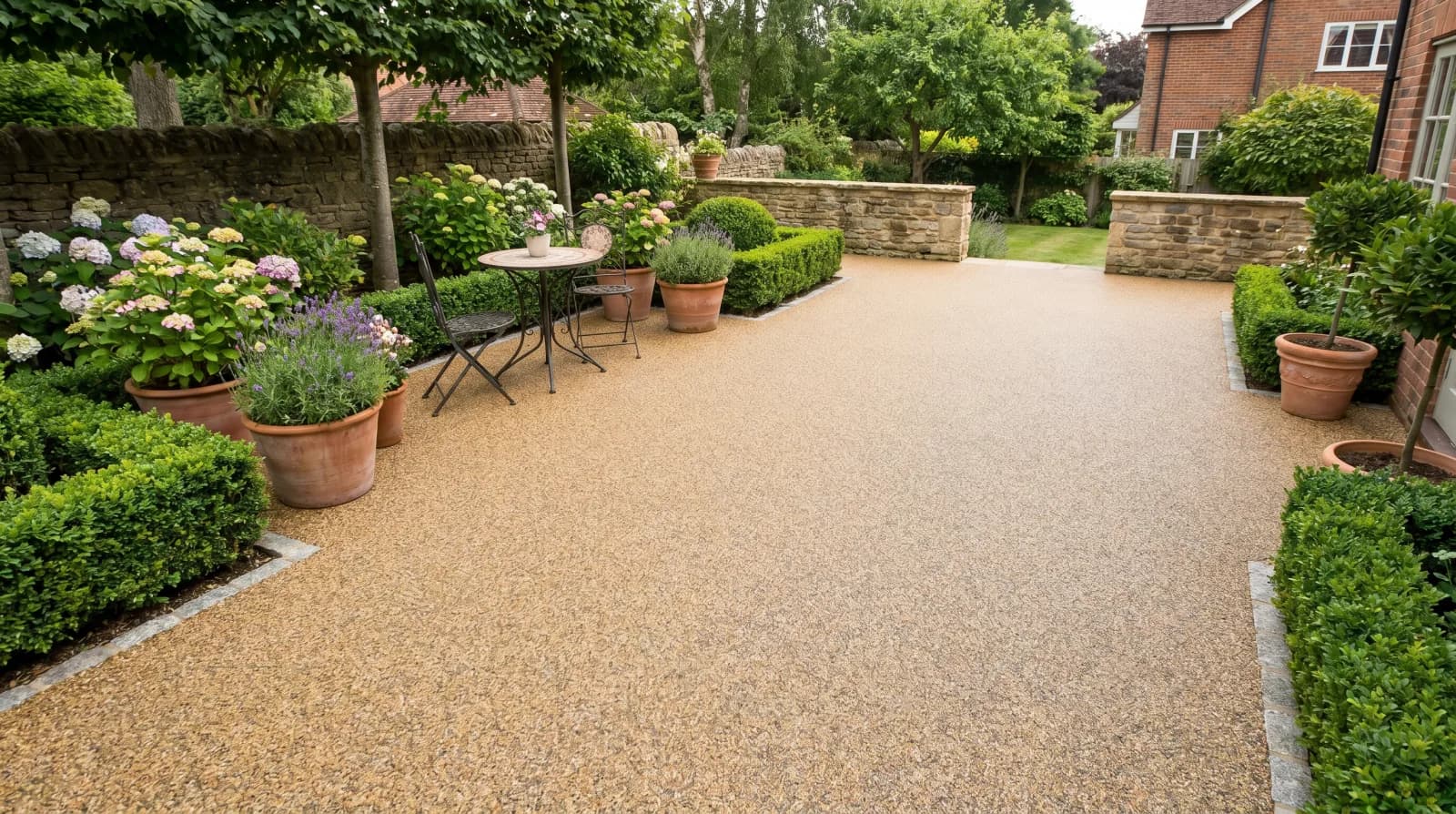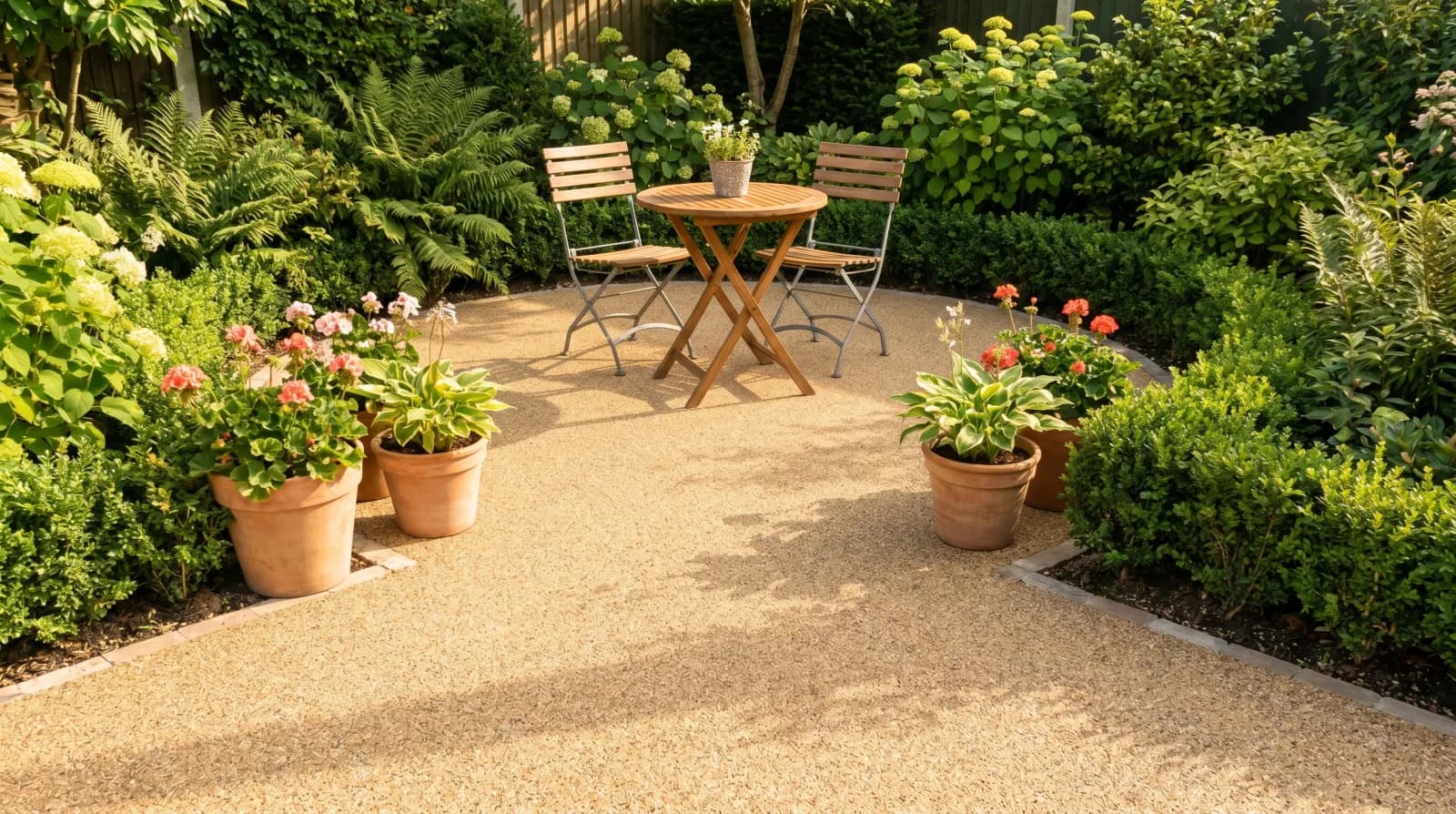
A resin bound patio uses exactly the same system as a resin bound driveway — decorative aggregate mixed with a clear UV-stable resin and trowelled smooth — just laid as a sitting area rather than for vehicles. The result is a seamless, hard-wearing surface that can reduce joint weeds; drainage depends on the complete base and falls beneath it.
How much does a resin patio cost per m²?
Resin bound is priced per m² — typically £60–£100/m² installed over a sound base, the same rate as a driveway, or about £85–£150/m² with our provisional groundwork allowance; the full base and drainage specification needs a survey. Because a patio is usually smaller than a drive, the total is lower, but installers can charge mobilisation fees; our model assumes £1,000–£1,500 for small jobs, so a small patio costs more per m².
| Patio size | Over a sound base | With groundwork allowance |
|---|---|---|
| Small patio (10 m²) | £1,000–£1,500 | £1,000–£1,500 |
| Medium patio (20 m²) | £1,200–£2,000 | £1,700–£3,000 |
| Large patio (30 m²) | £1,800–£3,000 | £2,550–£4,500 |
| Whole garden terrace (50 m²) | £3,000–£5,000 | £4,250–£7,500 |
Indicative national ranges, not quotes. A 10 m² patio sits at our editorial small-job allowance job charge whichever base it needs, which is why both columns match. For a pedestrian-only patio the surface can be laid a little thinner than a driveway, which can trim materials slightly. Put your length and width into the cost calculator for an estimate.
Why choose resin for a patio
Its surface is porous, and a suitable draining base can help manage rainwater on site; there are no loose stones to walk into the house or open paving joints to maintain; and it comes in a wide range of colours and blends that can flow seamlessly around steps, borders and garden features.
Resin patio ideas
Popular looks include a warm golden blend that suits brick and stone homes, a cool silver-grey for a contemporary feel, and a seamless run that flows from the back door across the whole seating area with no joints or steps to trip on. Many homeowners frame the patio with a contrasting border or carry the same finish onto a connecting path. Match the colour to your house and local stone — see colours and finishes for the full range.
Resin patio vs slabs and paving: pros and cons
Against patio slabs or block paving, resin bound wins on a seamless look, no weedy or sandy joints to maintain, and a porous surface layer. Slabs and blocks keep the edge that individual units can be lifted and replaced. Resin needs a sound base and a dry weather window to lay, so it is a professional job for anything but the smallest area.
Laying over an existing patio
Some named systems can overlay sound, stable concrete or paving after the specified preparation. Cracked, moving, hollow or poorly drained areas need remedial work or replacement. An impermeable substrate does not become fully permeable beneath a resin bound overlay, so falls and on-site drainage still need to be designed — see how a resin surface is installed.
Maintenance
A resin patio is relatively low-maintenance: sweep and clean as needed, following the named system's guidance on pressure and cleaning products. See the maintenance guide for cleaning and repair detail.